


- Sphere Link
- May 15, 2026
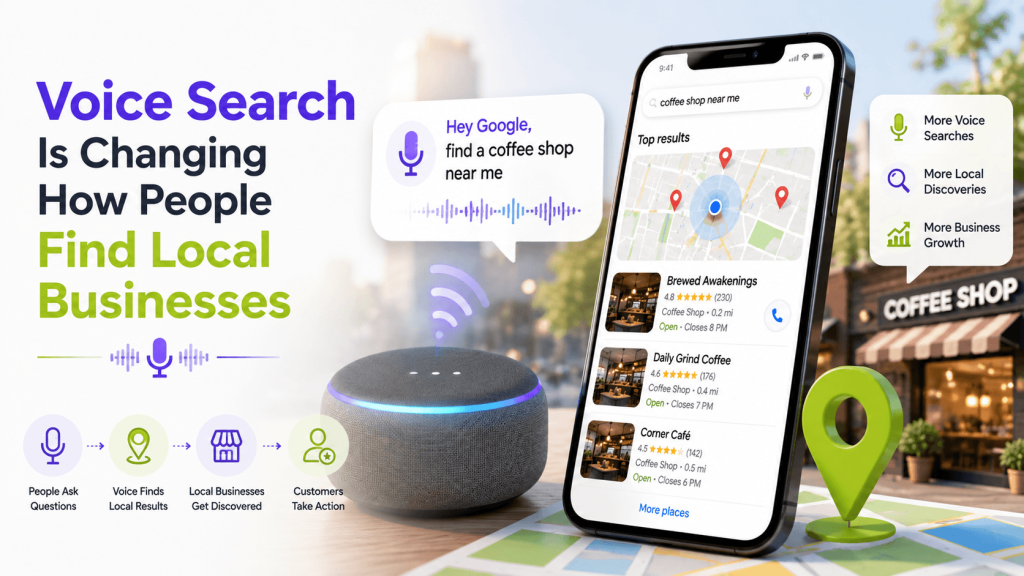
“Hey, where’s the closest hardware store that’s open right now?” That sentence, spoken to a phone or a smart speaker, is becoming one of the most common ways people look for local businesses. It’s fast, it’s hands-free, and it usually returns just one or two answers instead of a full page of options.
For a small business owner, that shift matters. When someone types a search, they might scroll through several choices. When they ask out loud, they often go with the single result they hear. Getting comfortable with how voice search works can help you be that answer.
People speak differently than they type
Typed searches tend to be short and clipped, like “vet clinic Austin.” Spoken searches are longer and sound like real questions: “What’s a good vet clinic near me that takes walk-ins?” To match those questions, your listings and website should answer them in plain, natural language rather than a pile of keywords.
The details you skip are the details people ask for
Voice assistants love specifics. Are you open now? Do you take reservations? Where exactly are you parked on the map? When your hours, services, and location are filled in and accurate, an assistant can confidently read your business back to the person asking. When those fields are blank, you’re easy to skip.
This is why keeping a complete, current profile pays off. A voice assistant can only share what it can find, and it pulls from sources it considers reliable.
Trusted listings feed the answers
Voice results are only as good as the data behind them. Assistants lean on established profiles and directories to confirm the facts before speaking. Listing your business on a dependable directory like Found Near You gives these systems one more accurate source to draw from, which improves the odds that your information is the version they trust and repeat.
Voice search rewards clarity. Write your business details the way a person would say them, keep every field complete, and make sure reliable sources agree on your facts. As more people talk to their devices instead of typing, the businesses with clean, natural, well-verified information will be the ones getting spoken out loud.